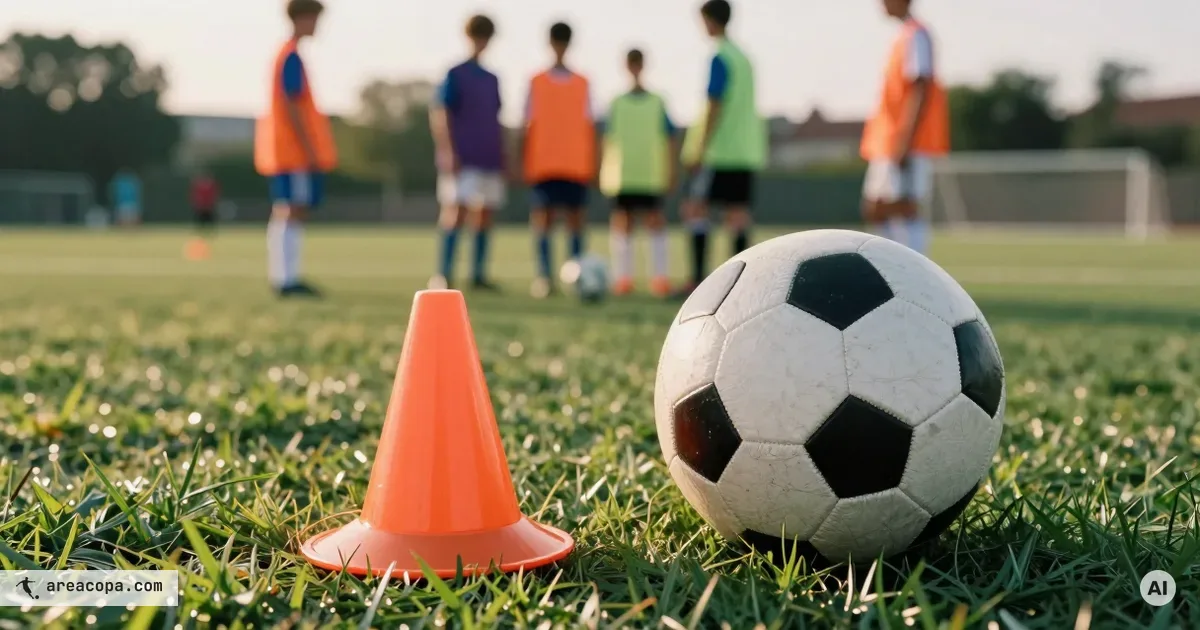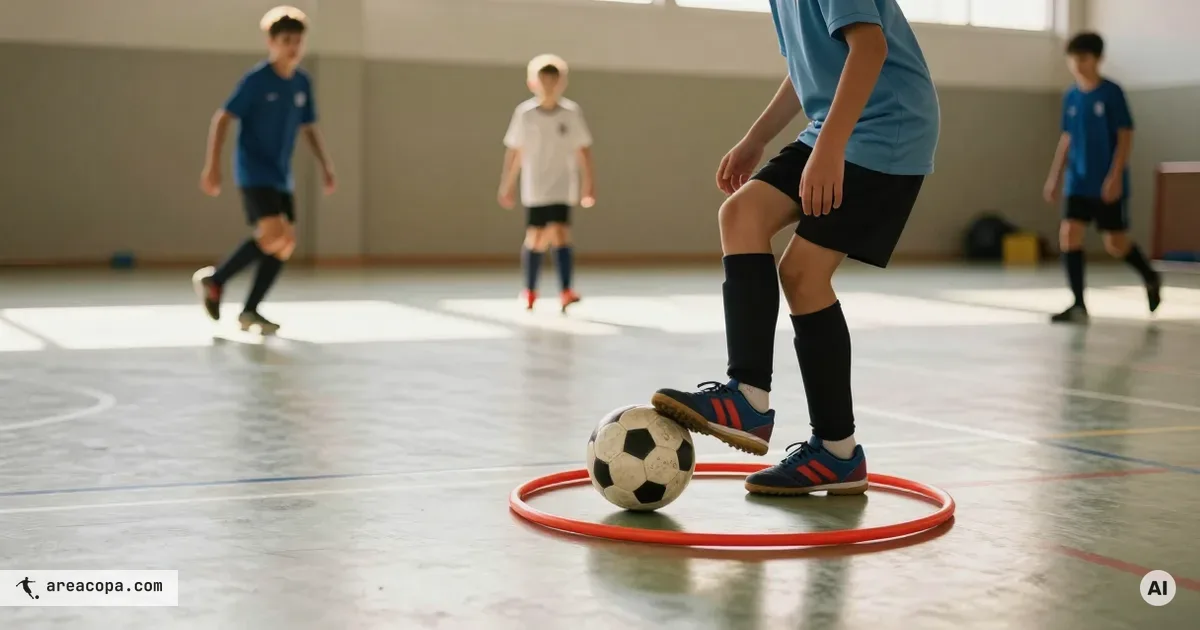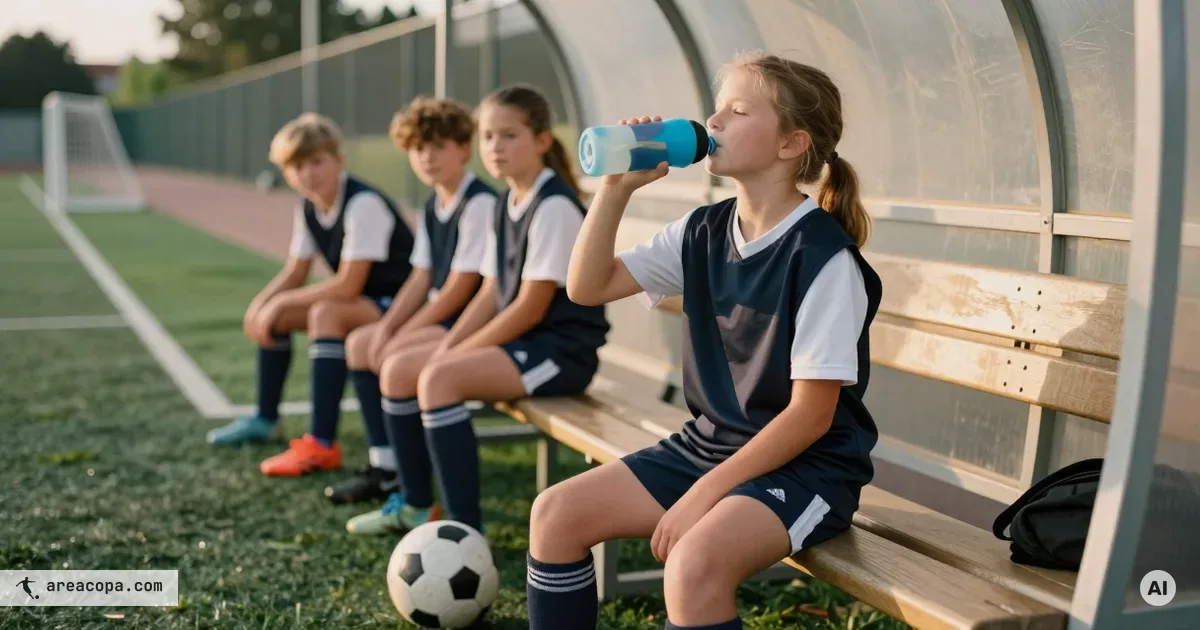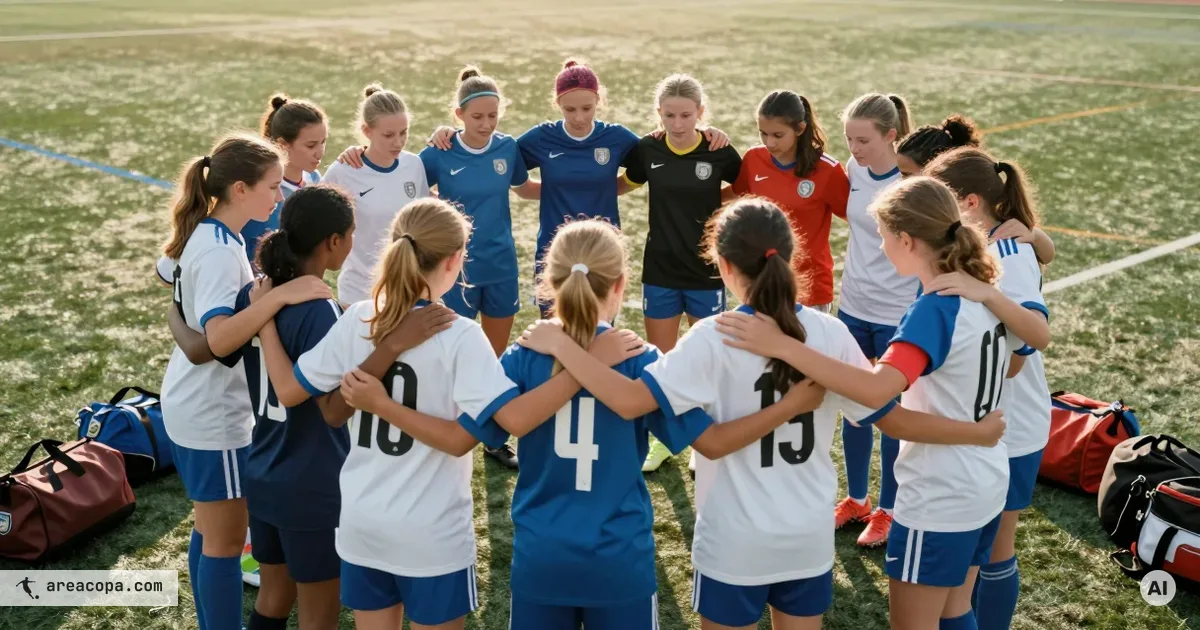
A tournament with a youth team is not simply "a few games on a Saturday." In youth football, or soccer as it's known in North America, it is a format of its own, with its own load patterns, its own nerves, and its own pitfalls. Most coaches sense this, but almost all fall into the same trap: they treat the tournament day like an upgraded league match and then wonder why the energy runs out by the afternoon.
This guide shows you step by step how to prepare your youth team for a tournament: in sporting, organisational, and mental terms. From four weeks before the tournament to the drive home after the final.
Why Most Youth Teams Go into a Tournament Unprepared
Tournaments differ from regular match play in almost every respect: shorter game times, smaller pitches, varying break lengths, several games in a row, an unfamiliar venue, parents in a tight space, and possibly a knockout game at the end against an opponent you have never seen before.
Typical traps you see with youth coaches time and again:
- "The kids know this, we don't need to change anything." Not true. In training they play 60 minutes on a full-size pitch; on tournament day it's eight games of 10 minutes on a small pitch.
- Packing the evening before. Something always goes missing, usually the pump or the bibs.
- No clear role for parents. Everyone drives separately, nobody brings the water crate, and the ride home is negotiated in the car park.
- No plan for the time between games. The kids stand around for 40 minutes, go cold, and walk into the next game like zombies.
The good news: you do not need a professional staff to fix this. You need a plan that starts four weeks before the tournament and ends on the afternoon after the final.
This article assumes your squad is already in place. If you still need to put your team together, the process starts with a scouting session in youth football.
4 Weeks Before the Tournament: The Training Plan
In the four weeks before a tournament the training focus shifts. You do not want to make your players fitter; the time is too short for that. You want to prepare them specifically for the tournament. The running and sprint base, by contrast, you build over the long term, for example with clean running drills.
4-Week Preparation at a Glance
One clear emphasis per week: tournament-specific small-sided games, then fitness sharpness, then set pieces, finally a taper week with reduced volume but equal precision.
Own illustration; small-sided game emphasis based on Piri et al. (2026)
Prioritise Tournament-Typical Situations
Tournament games are short (usually 10–15 minutes), on a smaller pitch, with fewer players per team. This has concrete consequences:
- More ball actions per player per minute — first touch, tight space, quick decisions
- Less time to settle into the game — the first 60 seconds must be sharp
- No build-up play over 40 metres — switching after winning and losing the ball becomes decisive
Build at least one block into every training session over the next four weeks that matches this rhythm: 4v4 on small goals, 3-minute games with fast substitutions, short transition games. Exactly these match-realistic formats — small pitch, few players, clear counter-triggers — transfer tactical perception and decision-making into games more effectively than isolated drills. This is especially true between the ages of 10 and 14.
Fitness: Short, Intense Efforts
A tournament day consists of several 10-minute efforts with breaks in between. This is not an endurance challenge. If you have your players doing 20-minute continuous runs in the final preparation phase, you are training exactly the wrong thing.
Better: short sprint sets with active recovery, for example 6 × 30 seconds all-out with 90 seconds of easy jogging in between. This resembles the tournament rhythm far more closely than steady-state runs. Do not mistake this for speed training, though: sets like these sharpen the tournament rhythm, but they will not make your players faster.
Set Pieces and Finishing
In short games, small details often decide: a won corner, a direct free kick, a penalty in the semi-final. Include a set-piece block in each of the last two or three sessions before the tournament: corners, indirect free kicks, and above all penalty shoot-outs.
Who takes penalties should be settled in advance. A discussion on the touchline while the kids are already standing in the centre circle is the worst possible scenario.
The Final Training Week: Volume Down, Precision Up
In the week immediately before the tournament, the classic taper principle applies: reduce volume, maintain sharpness.
What This Means in Practice
- Two sessions instead of three if your team normally trains three times a week
- No long runs, no general endurance work
- Short, sharp efforts: passing, finishing, transitions
- No new tactical concepts. Whatever the kids cannot do now, they will not learn by Saturday
Communicate the Line-up and Roles
Tell your players clearly in the final session who is in the squad, who starts, and who plays in which position. Surprises on the morning of the tournament create unnecessary stress, especially for children who are still mentally fragile.
If you have more players in your squad than are allowed on the pitch, communicate now what the substitution rotation will look like. "Everyone plays roughly the same amount" is not enough. Say it concretely: which blocks, which role, which moments for substitutions.
Mental Preparation: Take Off the Pressure, Add Seriousness
Youth football, youth soccer, is children's football. That does not mean tournaments are not serious; it means that seriousness looks different from the adult game.
Set Realistic Goals
"We'll win the trophy" is almost never a good goal. Either you win it (then the goal was too easy) or you don't (then the weekend feels like a failure). Both are bad.
Better goals that every team can achieve, regardless of their final position:
- "In every game we create two clear goal-scoring chances."
- "We win the ball back immediately after losing it."
- "We perform as a team. Nobody moans, nobody puts others down."
State these before the first game in the team circle, and bring them back in the closing moment at the end of the tournament. That way you measure success against what is actually in your hands, not against the trophy.
Normalise Pre-Match Nerves
Children who have never been to a tournament before are nervous. That is good, because excitement is energy. Tell them clearly that this is fine:
"Nerves are fine. It just means you care about what is about to happen. Your body is getting you ready. Once it starts, you won't notice them anymore."
Avoid phrases like "you don't need to be nervous." They do not work for anyone, adults included.
The Coach as Emotional Anchor
On tournament day, children look at you at least as often as they look at the ball. If you seem nervous, they become nervous. If you shout from the touchline, they play tensely. If you stay calm and friendly after a 0:3 defeat, they process the result faster.
This is not a performance. It is your most important coaching lever across the entire tournament day. Calm, questioning coaching goes hand in hand with more pro-social and less anti-social behaviour from players towards opponents than loud, pressuring coaching. You shape the atmosphere on the touchline more powerfully than any tactical instruction.
Parent Communication: Early, Clear, Written
No later than two weeks before the tournament, send a message out: email, chat group, club app, whatever your channel is. Cover:
- Venue and kick-off time of the first game
- Meeting time and place: not just before the game; aim for 75 minutes before kick-off
- Car pools: best coordinated by one parent, not by you
- What the children wear and bring (shirt, shorts, socks, shin guards, boots suited to the surface)
- What parents bring if the team is coordinating food (fruit, drinks, cake)
- The drive home: who takes whom back
Get Ahead of the Playing-Time Conversation
The most common source of conflict with parents on tournament day: "Why did my child play less?" If you have communicated openly in advance how you rotate, you defuse 90% of it. For example:
"In the group stage we rotate through; everyone gets similar playing time. From the semi-final onwards I select on sporting criteria. I have told the children exactly the same."
Important: say this before the tournament, not after a game. Afterwards it sounds like justification; beforehand it sounds like leadership.
The Packing List: What Goes in the Coach's Car and the Team Bag
Do not pack the evening before. Pack three days in advance and put the list next to the bag; that gives you time to get anything that is missing.
Sports Equipment
- Match balls in the correct size (at least 3)
- Warm-up balls (ideally one per player)
- Cones in two different colours
- Bibs in two colours
- Spare shirts if the organiser requires them
- Studded and indoor boots, in case the tournament moves inside in bad weather
- Pump and ball needles
First Aid and Small Items
- First-aid kit: plasters, antiseptic, cooling spray, tape, scissors
- Towels
- Sunscreen (even on cloudy days)
- Bin bags for wet bibs, boots, and rubbish
- Pen, paper, printed copy of the schedule
- Charging cable or power bank for the phone, because schedules and live results run digitally these days
Food, Drink, and Weather
- A large water supply, more than you think you need
- Bananas, pretzels, possibly cereal bars
- No sweets before or between games. A blood-sugar rollercoaster kills performance in the third game
- Rain jackets for all players (club kit or personal)
- A change of clothes: one dry shirt and a pair of socks per player
Tournament Day: Arrival and Warm-Up
Tournament Morning: From Meeting Point to Kick-Off
Example schedule for a 10 a.m. game. Be on site half an hour before kick-off, 20 minutes of structured warm-up, communicate the line-up 15 minutes before.
Example schedule. Adjust buffer times to travel distance.
Be There at Least 30 Minutes Before Kick-Off
A kick-off at 10:00 means: meeting point at 08:45, depart at 09:00, arrive by 09:30 at the latest. If you only arrive at kick-off, you start the tournament already in deficit. Half an hour is the lower limit: if you do not know the route, build in more slack and set off earlier.
These 30 minutes between arrival and kick-off are needed for:
- Finding the pitch and the changing room
- Collecting numbers and paperwork
- Letting the children get changed
- Structured warm-up (20 minutes)
Structure the First Warm-Up
Aimless ball-kicking before kick-off is not a warm-up; it is a time-filler. A simple 20-minute block is all you need:
- 5 minutes: Jogging and light mobility
- 5 minutes: Passing squares: pass quality, first touch, two-touch
- 5 minutes: Shots from distance (remember the rhythm for the goalkeeper!)
- 5 minutes: Position-specific: short small-sided games, 3v3 or 4v4
Then: water, brief team talk, onto the pitch.
At an indoor tournament there is often no room for this block. Short formats for the edge of the hall are in the indoor warm-up games.
Announce the Line-Up and Explain It
Give the line-up no later than 15 minutes before kick-off, not one minute before. Children need a moment to settle into their role. Address each player by name, show them their position, and give them one core task:
"You are right back. Key point: stay back, even when we attack. And talk to your midfield teammate; they often don't have a view of what's happening behind them."
One task, one sentence. More than that does not land.
Between Games: Make Good Use of the Breaks
Between two games there might be 15 minutes or there might be 90 minutes. That makes a huge difference, and you need a plan for both scenarios.
Short Break (Under 30 Minutes)
- Drink (water, not juice)
- A small snack only if genuinely hungry; half a banana is enough
- Two or three minutes of easy jogging, shaking the legs out
- Brief team talk: what went well, one thing for the next game
Long Break (Over 45 Minutes)
- Shoes off, legs up
- Eat properly: pretzel, banana, plenty of water
- Stay warm, especially in cold weather (jacket on, do not stand around in just the shirt)
- Warm up again 10 minutes before the next game, otherwise the children go in cold and the first two minutes are wasted
Keep Team Talks Short
No rousing speeches. No lengthy tactical analysis. Between games, children have an extremely short attention span. Two concrete sentences, one positive closing point. Done.
How to structure the talk before the very first game of the tournament and which phrases to avoid is explained in team talk for youth football.
"We pressed well but gave the ball away too often. Next game: secure it first, then go forward. And: don't overthink it, you've got this."
Clear Their Heads When Things Are Not Going Well
If the team stands silently and frustrated after a defeat, do not respond with a speech. Give them five minutes. Let them drink water, let them talk to each other. Then bring them back together, positively and calmly. A defeat in the middle of a tournament day is not a reason for a dressing-down; it is a chance to show character.
Coaching During Games
Substitutions: Fair, Rhythmic, Planned
Think through before the tournament when you will substitute whom in each game. "Gut-feel rotation" almost always ends with one player getting 90% of the tournament time and another getting 20%.
A simple system:
- 3 blocks per game (beginning, middle, end): split a 10-minute game into three time slots and plan who is on the pitch for each block. Substitutions happen at two fixed moments, not on instinct.
- Every player gets at least two out of three blocks in the group stage
- In knockout games you may select more on sporting merit, but communicate this in advance
A trick that always works: write the substitution order for each game on a piece of paper beforehand. That way you are not relying on your memory when the game gets hectic.
Stay Calm on the Touchline
The younger the players, the less coaching during the game helps. Children cannot simultaneously run, watch the ball, see teammates and process your calls. With many live instructions, players miss the free teammate in up to 45% of cases because their focus is already occupied processing the coach's call. The important things you say beforehand: in the pre-match talk, at half-time, briefly on the touchline at a substitution.
Avoid result-focused comments like "that cannot happen!" They achieve nothing and only damage trust.
Half-Time Feedback: Maximum Three Points
The half-time break in a tournament game is 2–3 minutes long. You have time for:
- One piece of praise: what specifically went well
- One correction: what we change
- One mental anchor: what the team takes onto the pitch
The children will not remember more. You do not need more either.
After the Last Game: Closing and the Drive Home
Whatever the outcome of the last game, the closing moment matters. Children remember the final moment of the day far more clearly than the interim score at 11:40.
Create a Team Moment
Brief circle, everyone together. Two sentences that do not depend on the final result:
"You fought as a team today. Every one of you did things you can be proud of. I am already looking forward to the next tournament."
If you won: celebrate, but with respect. No taunting gestures towards the opponents, no over-the-top celebrating. Children copy exactly the behaviour you model.
If you lost: do not play it down, but do not dramatise it either. "Today it wasn't enough. Next time we go again."
Involve Parents, Collect Equipment
Before everyone rushes home:
- A brief word to the parents: thank you for driving, thank you for the food
- Collect bibs, balls, cones, and the first-aid kit (delegate this to two players who have a job to do)
- Check the pitch and the changing room: leave nothing behind
Follow-Up and Next Steps
The work does not end with the drive home. The days after the tournament are the moment when you truly learn as a coach and turn the tournament into a springboard for the weeks ahead.
Reflect on What Worked
The day after the tournament, once the emotions have settled: 20 minutes with a notepad:
- What worked in the games?
- What went well organisationally, and what did not?
- Which player exceeded expectations, which one struggled, and why?
- What three things will I do differently at the next tournament?
Notes like these, taken after every tournament, bit by bit, are what turn you from a beginner into an experienced tournament coach over the course of a year.
Individual Conversations with Players
At the next training session: short, personal feedback. Not in front of the group, but in one-to-one moments on the sideline. A player who made mistakes on tournament day should hear from you concretely what they did well and what they are working on, before the frustration sets in.
Keep the Next Tournament in Mind
If you really want to internalise the tournament experience, organise a small one yourself next time. A small warm-up tournament with two or three friendly clubs, three to four games per team, all in one morning. Your players build tournament routine, and you learn the other side: that of the organiser, of the parents of the visiting teams, of the logistics. A step-by-step template from the first invitation to the trophy presentation is in the football tournament checklist.
With a digital tool like AreaCopa, this is simpler than most coaches think: schedule in a few minutes, live results on the phone, groups and knockout rounds ready to go. No paper chaos, no handwritten table on the clubhouse wall.
Set up my own warm-up tournamentFree and no sign-upSources
- Piri, N., Ihsan, F., Makadada, F. A., Lolowang, D. M., & Sobko, I. (2026). Game-based learning strategies to enhance tactical awareness in youth football: a mixed-methods study. Health, Sport, Rehabilitation, 12(3), 26–34. — Systematic review: small-sided games (4v4, counter-triggers) consistently improve decision-making and tactical understanding; most effective between ages 10 and 14.
- Memmert, D., & König, S. (2011). Vermittlung von Spielfähigkeit. In A. Güllich & M. Krüger (Hrsg.), Sport — Das Lehrbuch für das Sportstudium. Springer. — Finding: too many live instructions narrow the attentional focus of young players; 45% miss the free teammate (Memmert 2004b).
- Müjdeci, İ., Kılıç, K., Bulut, A., & Kuru, H. (2026). Coaching effectiveness in competitive youth contact sports and martial arts: athletes' and coaches' perceptions. Frontiers in Psychology, 16, 1725858. — 4-Cs model of coaching effectiveness in youth sport; citing Allan & Côté (2016): calm, questioning coaching is associated with more pro-social and less anti-social player behaviour towards opponents than loud, pressuring coaching.