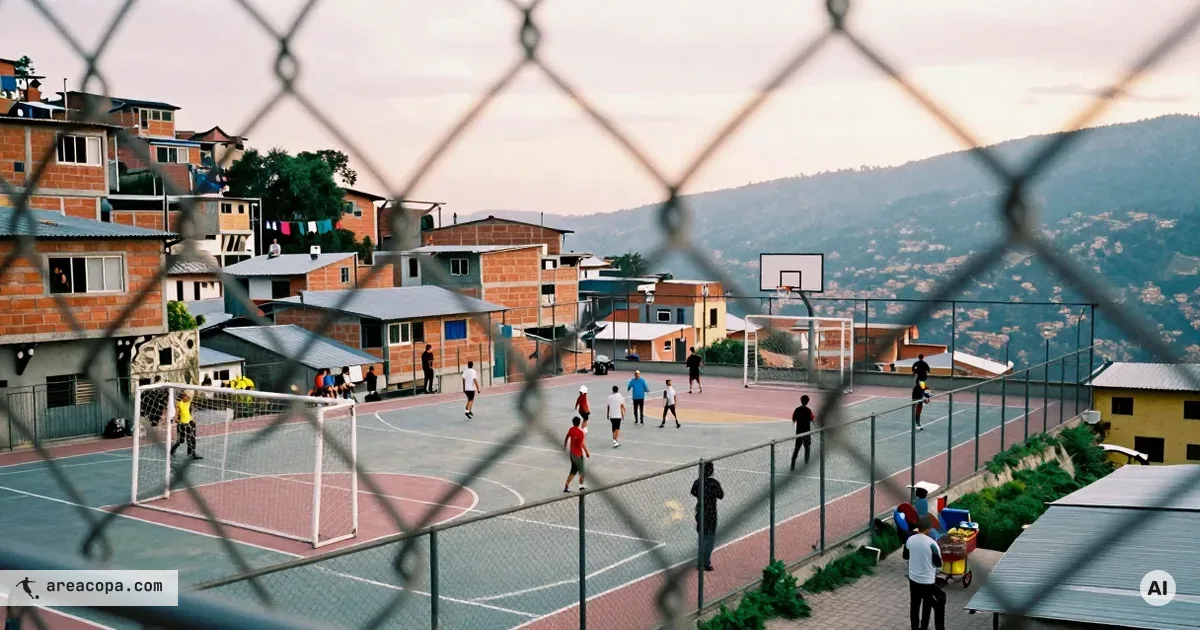
Organizing a football tournament, or a soccer tournament as it is known in North America, is a highlight of the year for many coaches. And at the same time it is the moment when they are still sitting at the kitchen table at 11 pm, turning it over. Will eight or ten teams fit? How long should the games be? Who is buying the burgers, and will the semi-final still fit within the booked time slot?
The problem is never that tournaments are "difficult" to organize. The problem is that too many threads come together at once: teams, schedule, equipment, catering, rules, parents, referees, weather. If one part lacks a plan, match day turns into improvisation, and improvisation on match day costs time, nerves and game minutes.
You avoid the most common planning mistakes, a schedule too tight to leave any buffer, an unclear registration deadline, or a fixture that only comes together the night before, by working through this checklist from top to bottom.
This guide gives you a complete checklist. You will see what needs to be done when, which decisions to make early, how to calculate a budget, what equipment belongs in the boot of your car and how a digital tool can take over schedule management for you. Whether you are planning your first tournament or you are an old hand, the step-by-step guide covers every phase, from 12 weeks of lead time to the prize ceremony. Every other tournament-planning guide, from fixtures for any team count to special formats, is gathered in the tournament-planning overview.
You organize and plan a football tournament in seven steps:
- Set the date and key details (around 12 weeks ahead): date, team count, format and budget are fixed before the first email goes out.
- Invite teams and contact referees (about 8 weeks ahead): send the invitation, track confirmations and a waiting list.
- Close registration and build the schedule (4 weeks ahead): lock the final team count, build the schedule and time budget.
- Prepare equipment and a plan B (1 week ahead): work through the equipment checklist, set a weather fallback.
- Set up and welcome teams (match day, early): mark the pitches, assign roles, check teams in.
- Run the tournament: keep the schedule live, watch breaks, injury prevention and fair play.
- Prize ceremony and follow-up: hand out trophies, pack down, thank the helpers, debrief with the team.
We explain each step in detail below, organized by lead time.
If you want to get started right away: the one-page checklist and the detailed workbook accompany this guide and cover all seven steps.
Organizing a football tournament – ChecklistPlanning template with 12-week timelineDownload PDF Organizing a football tournament – WorkbookWorkbook with budget worksheet, letter templates, role cards and cheat sheetDownload workbookPlanning a Football Tournament: 12 Weeks Before
Before you send the first email, four things must be fixed. Otherwise you will lose double the time later.
Twelve weeks are enough for a club tournament with 8 to 12 teams. For large events with sponsors, side activities and teams travelling from far away, many organizers allow four to six months.
12 Weeks to Kick-Off
Milestones of a stress-free club tournament
Tournament Format
The format determines duration, excitement and playing time per team. Four realistic options for club tournaments:
| Format | Teams | Groups | Phases | Games per team | Games total | Advantages | Disadvantages |
|---|---|---|---|---|---|---|---|
| Group stage only | 12 | 2 | Group | 5 | 30 | Fair comparability | No final, long total duration |
| Group stage + placement groups | 12 | 2 per phase | Group, placement groups | 10 | 60 | All teams play equal amounts, balanced phase 2 | No knockout climax, highest game count |
| Group stage + full placement | 12 | 2 | Group, semi-finals, finals | 7 | 42 | Complete 1st–12th ranking, all play equal | More time needed, only with even groups |
| Group stage + knockout | 12 | 2 | Group, quarter/semi-finals, final | 5–8 | 37 | Maximum excitement, real final feeling | Losers exit early, less playing time |
| Pure knockout | 12 | – | Preliminary, quarter/semi, final | 1–4 | 11 | Fast and exciting, no group stage needed | Early exit frustrates, uneven playing time |
Five Tournament Formats Compared
Which one fits your team count and available time?
For a typical youth tournament with 12 teams you have two solid options. The group stage + knockout provides a clear climax, but only the top four from each group advance to the knockout bracket; the rest are done after the group stage. If it matters to you that every team plays the same amount, group stage + placement groups is the better choice: ten games for everyone, but no final.
If both matter to you, equal game counts for every team AND a real final, then group stage + full placement is the middle ground. After the group stage every team plays two placement matches: cross semi-finals, then finals within the bracket. The result is a complete 1st-to-12th ranking including a final for 1st place. It needs more playing time but gives every team a real placement.
With smaller team counts the bracket thinking breaks down: for exactly four teams, the four variants in the four-team tournament guide are the clean reference, with a tiebreaker list and day plan per variant. Anyone wanting to squeeze a whole one-day tournament into one slot (4 to 12 teams, morning/afternoon/full day) can find the right fixtures in the one-day tournament guide.
If you want a whole season with a running table instead of a one-day tournament, starting your own soccer league is the right format.
Age Group and Pitch Size
A U7 festival needs different conditions from a U15 full-pitch tournament. In England the formats are not yours to choose: the FA's Standard Code of Rules for Mini Soccer and Youth Football Competitions sets a maximum format for every age group and is mandatory for all mini soccer and youth football competitions. Sheffield & Hallamshire County FA, for one, writes into its sanction conditions that all age groups and formats at a tournament must be in line with it. With the 2026-27 season every format moved one year later, so 11v11 now starts at Under 14. A table that still shows 9v9 at Under 11 or 11v11 at Under 13 describes 2025-26 and earlier.
FA Formats Under 7 to Under 18 (season 2026-27)
Recommended pitch sizes to scale, from 3v3 at Under 7 to 11v11 from Under 14.
The FA, Standard Code of Rules for Mini Soccer and Youth Football Competitions (FA Handbook 2026-27): maximum permitted format and recommended pitch size without run-off.
The exact requirements, with the maximum minutes per game and per day:
| Age group | Maximum format | Ball | Recommended pitch | Max. minutes per game | Max. minutes per day |
|---|---|---|---|---|---|
| Under 7 | 3v3 | Size 3 | 15 x 10 m | 10 | 60 |
| Under 8 and Under 9 | 5v5 | Size 3 | 37 x 27 m | 40 | 60 |
| Under 10 and Under 11 | 7v7 | Size 3 | 55 x 37 m | 50 | 90 |
| Under 12 and Under 13 | 9v9 | Size 4 | 73 x 46 m | 60 | 120 |
| Under 14 and Under 15 | 11v11 | Size 5 | 82 x 50 m (Under 14), 91 x 55 m (Under 15) | 70 | 150 |
| Under 16 | 11v11 | Size 5 | 91 x 55 m | 80 | 150 |
| Under 17 and Under 18 | 11v11 | Size 5 | 100 x 64 m | 90 | 180 |
Every pitch should have a run-off of at least 3 m on top of these sizes. Matches are played in equal halves; from Under 8 to Under 11 quarters are allowed as well. Children under 6 are not allowed to play in a match of any kind, and Hertfordshire FA states that it will not sanction an event for under-6s.
The FA sets maximums for match length, not minimums. For round robin and trophy events the Standard Code says that the maximum duration of play per half cannot be exceeded, "but the minimum duration of play per half may be adjusted". A tournament match of 10 or 12 minutes is therefore within the rules from Under 8 upwards; at Under 7 the ceiling is 10 minutes per game. What binds your schedule is the daily cap in the last column. The FA caps minutes per day, not the number of matches, so do the sum per team before you fix the playing time: six matches of 10 minutes use up the whole day of an Under 9 team.
Check pitch availability at the same time. For the small formats you need several pitches side by side: 14 teams playing 3v3 at the same time fill seven pitches. A 9v9 tournament at Under 13 needs at least one pitch of the recommended 73 x 46 m, ideally two. More on small-sided formats for the youngest age groups is in our guide to new game formats in youth football.
Results, Tables and Trophies for the Youngest
In England the age group also decides whether your tournament may name a winner at all. The Rules of the Association for 2026-27 draw three lines:
- Under 7: no trophy events. Competitions for this age group "may consist of organised development fixtures only"; results may be collected but must not be published.
- Under 8 to Under 11: results and tables of ordinary fixtures must not be published. Leagues may organise at most three trophy events per season, each played over at most 2 weeks at Under 8 and Under 9 and at most 4 weeks at Under 10 and Under 11. The results of a trophy event may be published, and mementos may be awarded.
- Under 12 to Under 18: no restrictions on the structure of the competition.
The rule on trophy events speaks of leagues. The FA publishes no national sentence on how many club-run one-day tournaments a team of this age may enter; the County FA decides when it approves your tournament rules, so ask before you announce a final for Under 9s. Older FA material, such as the Mini-Soccer Handbook for 2025/26, still allows trophy events from Under 7; the 2026-27 rules are the newer text.
In practice: for Under 7 you do not plan a group stage, a semi-final or a winner's podium. You plan rounds with a fixed playing time, rests between them and at the end a short closing round with a certificate for every child.
United States: Soccer Formats and Results
There is no single national rulebook for youth soccer in the United States. U.S. Soccer published its small-sided standards for U6 to U12 in the Player Development Initiatives of 2017, an old edition for which we found no newer one. US Youth Soccer, one of its member organisations, has its own playing rules, as of June 23, 2026. The two disagree in places, so check which body sanctions your tournament.
| Age group | U.S. Soccer (2017) | US Youth Soccer (2026) | Ball |
|---|---|---|---|
| U6 to U8 | 4v4, no goalkeeper, field 25 to 35 x 15 to 25 yards | 6 and under: no more than 4 players, 3 strongly recommended; 8 and under: no more than 5, 4 strongly recommended | 3 |
| U9 and U10 | 7v7, field 55 to 65 x 35 to 45 yards | 10 and under: no more than 7 players, 6 strongly recommended | 4 |
| U11 and U12 | 9v9, field 70 to 80 x 45 to 55 yards | 11 and 12 and under: no more than 11 players, 8 strongly recommended | 4 |
| U13 and older | 11v11, field size not stated | number of players not stated | 5 (US Youth Soccer) |
Neither body publishes a minimum or maximum game length for tournaments, or a cap on games or minutes per day. US Youth Soccer's regular game lengths, for example two 25-minute halves at 10 and under and two 30-minute halves at 11 and 12 and under, apply "except as provided by USYSA and its State Associations".
On results, U.S. Soccer says that from U6 to U12 results and standings "should not be recorded", that U6 to U8 players should not take part in tournaments at all, and that events for U9 to U12 should offer "a predetermined number of games with no advancement, placement games or champions". That is a recommendation from 2017, not a ban. US Youth Soccer states only that ties stand at 10 and under; it publishes no age from which champions and awards are allowed.
Canada: Soccer Formats and Results
Canada Soccer's Grassroots Standards are mandatory for all member organizations from the 2026 playing season. They set maximums for U6 to U13:
| Age group | Format | Field (length x width) | Ball | Maximum match duration | Maximum per player per day |
|---|---|---|---|---|---|
| U6-U7 | 3v3 | 25 to 30 x 18 to 22 m | 3 | 30 minutes | 60 minutes |
| U8-U9 | 4v4 without or 5v5 with a goalkeeper | 30 to 36 x 25 to 30 m | 3 or 4 | 40 minutes | 80 minutes |
| U10-U11 | 7v7 | 40 to 55 x 30 to 36 m | 4 | 50 minutes | 100 minutes |
| U12-U13 | 9v9 | 65 to 75 x 45 to 55 m | 4 (U12), 5 (U13) | 70 minutes (U12), 80 (U13) | 120 minutes |
From U8 the minimum rest between two matches is the duration of one match. Players from U6 to U9 must play in a festival format: one or two matches in a day, no placement or elimination games. At U11 and younger, tournaments "cannot include elimination games" and should be played festival-style, with all teams playing an equal number of games; at U12 and U13 elimination games are allowed. The standards also cap the number of tournaments per season at two for U8-U9 and U10-U11 and three for U12-U13, which is worth knowing before you invite.
Canada Soccer publishes no minimum match length, and no national formats or results rules for U14 and older. Alberta Soccer's tournament policy of June 2024 still draws the no-results line at U7 and lists a different maximum of players per side; the national standards are the newer text.
Scheduling
Check at least three calendars before setting a date:
- Association fixture calendar: No overlap with competitive matches.
- School holidays: Half-empty squads are the most common cause of last-minute cancellations.
- Local competition: Other tournaments in the area on the same weekend reduce your acceptance rate.
Ideal lead time: 12 weeks, that is three months, starting with finding the date and reserving the venue. Less than that and team recruitment becomes tight; more than that and clubs forget the invitation.
The sanction deadline of your federation sits inside this window, and it is the one date you cannot move. In England it depends on the County FA: Hertfordshire FA wants the event details at least two months before the tournament, Sheffield & Hallamshire County FA at least 28 days before. In the United States, US Club Soccer takes applications no later than 60 days before the start. Apply in week 12, together with the venue booking, and none of these deadlines can catch you out.
Budget
Calculate early, not a week before the tournament. Typical line items:
- Venue hire (pitch or hall)
- Sanction fee of your federation (in England, for example, £30 at Hertfordshire FA for a tournament of up to two days)
- Referees (expenses plus travel costs)
- Balls, consumables, medals, trophies
- First-aid supplies
- Catering purchase (if the club caters itself)
- Printing costs (certificates, schedules, rules sheet)
Simple rule of thumb for the entry fee: (Fixed costs + 15% buffer) / number of teams. With 8 teams and 240 euros in fixed costs that is around 35 euros per team. As an example: 20 to 40 euros per team. What clubs near you charge is the better yardstick. The amounts in this guide are examples in euros; put in your own figures in pounds or dollars. State the amount in the invitation so there is no argument on match day.
Calculating the Entry Fee per Team
Rule of thumb with 15% buffer, plus three realistic scenarios.
Three scenarios compared
| Teams | Fix | Variabel | Puffer (15 %) | Summe | Startgeld / Team |
|---|---|---|---|---|---|
| 5 | 180 € | 60 € | 36 € | 276 € | 55 € |
| 8 | 280 € | 120 € | 60 € | 460 € | 58 € |
| 12 | 380 € | 220 € | 90 € | 690 € | 58 € |
The table shows an effect that is easy to miss when you do the sums: across all three scenarios the entry fee per team stays almost constant at 55 to 58 euros. The reason: as the tournament grows, it is not only the fixed costs that grow but the variable ones too (catering, medals, balls). The only block that is genuinely spread out is the fixed one — same pitch, same referee, more teams — and only then does the contribution fall. So the lever for an affordable entry fee is not more teams but a smaller fixed block: get the pitch cheaply or for free, or pass the fixed items on to local sponsors.
Local Sponsorship: Baker, Butcher, Local Bank
A club tournament rarely finances itself through entry fees alone; local sponsors close the gap between real costs and a reasonable participant contribution. Three sources work reliably in practice:
- Food and bakery trade: bakers, butchers and drinks suppliers usually provide goods (rolls, sausages, cases of drinks) worth 50 to 150 euros, in exchange for a banner and a mention in the opening address.
- Local bank or building society: many have community budgets for youth work, 100 to 500 euros depending on tournament size. Lead time at least eight weeks, because the application often passes through two committees.
- Local tradespeople and service providers: a car dealership, heating engineer or accountant is often the most financially capable group but needs a personal connection. Ask on the club committee who knows someone before approaching cold.
Write a one-page letter with the date, tournament size, expected audience and a concrete benefit, and hand it over in person: three personally delivered letters beat 20 anonymous mass emails. A ready-made template is in the workbook download below. A realistic target for a 12-team tournament is around 500 euros from three or four sponsors; starting this way builds a solid pipeline for the next season instead of acquiring from scratch every year.
Hall or Outdoor? A Quick Decision Tree
Four questions are enough to make the format decision:
- Season: November to March: hall. May to September: outdoor. April and October: weather risk, prefer a hall if available.
- Team count: Up to 8 teams fits any hall. From 10 teams you need parallel pitches or a long hall day. Outdoor with two pitches is often the cleaner solution.
- Age group: Under 7 to Under 11: small formats on several small pitches (hall or outdoor possible). Under 12 and above with a classic tournament mode: a 9v9 or full-size pitch preferred.
- Budget: Hall hire typically costs 2 to 3 times as much as a standard pitch fee; outdoor brings fewer extra costs (no electricity, no caretaker surcharge).
If the answers point to a hall, our guide on organizing an indoor tournament goes deeper into the 8-team, 3-hour format. This article stays with the outdoor club tournament of 8 to 16 teams.
Sanction, Insurance and Legal Points
A few legal points are best clarified very early, because they need lead time and vary by County FA and by local council. The following list is not legal advice; it shows you what to check:
- Sanction: In England every tournament or festival needs the sanction of the County FA in whose area it takes place. The Rules of the Association require written consent "for any Competition for Under 18 age groups and below". There is no national deadline and no national fee; each County FA sets its own. Hertfordshire FA asks for the event details at least two months ahead through an online form, the tournament rules on its own template, a named Tournament Welfare Officer and, three weeks before, the list of all teams; the fee is £30 for a tournament of up to two days, payable at least two weeks before. Sheffield & Hallamshire County FA asks for everything at least 28 days ahead and charges £30. All teams must be affiliated to their County FA. If a team from outside England takes part, the tournament is a matter for The FA itself, not the County FA: contact The FA.
- What an unsanctioned tournament loses: According to Hertfordshire FA, the competing clubs and the referees are then not covered by their insurances and could face disciplinary action.
- Insurance: The FA's Standard Code requires every club in a sanctioned competition to hold public liability insurance of at least £10,000,000 and personal accident cover for all its registered players. Check with your club whether that cover extends to spectators and guests at your event.
- Safeguarding: The FA publishes no national guidance note written for tournament organisers; the County FA sets the conditions. Hertfordshire FA requires a Tournament Welfare Officer for every event with players under 18: an official of the organising club with a current FA DBS check and a Safeguarding Children qualification, with at least one named officer on site throughout the event. Hertfordshire FA also requires the coaches of youth teams to hold an FA DBS check and the Safeguarding Children Course. Sheffield & Hallamshire County FA asks for a Dedicated Safeguarding Officer at events for under-18s.
- Duty of supervision: At children's tournaments, supervision stays with each club and coach. Decide in advance who looks after which team, especially during breaks and off the pitch.
- Venue: To use the pitch or hall you need the owner's approval, meaning the club, school or local council. Ask the council as well whether selling food needs to be notified.
- Raffle: A raffle can need a registration or a permit. Ask your local council in good time.
- Music licensing: As soon as you play music in public, for example at the opening or during breaks, a licence can be required. Ask the venue owner or your club whether one is already in place.
When in doubt, clarify these points through your club, your County FA and the local council, ideally several weeks before the tournament.
United States: Sanctioning a Soccer Tournament
A soccer tournament in the United States is sanctioned by the member organisation the host club belongs to. Two of them, US Youth Soccer and US Club Soccer, work differently:
- US Youth Soccer: the host applies to its State Association, which sets the deadline and the fee; US Youth Soccer publishes no national lead time or fee. With the application you sign the Tournament or Games Hosting Agreement. In it you confirm, among other things, liability insurance of not less than $1,000,000 per occurrence and $2,000,000 aggregate plus an umbrella policy of not less than $5,000,000, medical releases for every player, and that police, ambulance and rescue services know the dates and fields.
- US Club Soccer: a member club submits the application "no later than 60 days prior to the start of the tournament"; the sanctioning fee is $100, and the tournament director must be registered with US Club Soccer.
Canada: Sanctioning a Soccer Tournament
In Canada the Provincial or Territorial Member Association approves a soccer tournament; Canada Soccer's Rules and Regulations oblige the associations to "approve and monitor all tournaments within their jurisdiction". Canada Soccer publishes no national lead time or fee. If teams from abroad take part, Canada Soccer's approval is required as well.
One province as an example: Alberta Soccer requires sanction as soon as four or more teams play organized games and at least one team comes from outside the host District. The local District approves the request first; the application names every change to the Laws of the Game that will apply at the tournament and includes the fee. A new tournament is sanctioned at most six months ahead, and a Discipline Chair and a Referee in Chief must be named to Alberta Soccer at least seven days before. An event that deviates from the policy is "unsanctioned and uninsured".
Once the Date Is Set: Invitations and Referee Requests
Once date and format are set, invitations go out and you contact referees. Goal: collect enough binding commitments over the coming weeks so that your field of participants is complete by the registration deadline.
What to Include in the Invitation
A good invitation is a single PDF or email with exactly these points:
- Date, time, venue, directions with parking information
- Age group and maximum squad size
- Tournament format and planned playing time per match
- Entry fee and payment method
- Registration deadline (firm, not "approximately by")
- What clubs should bring (second kit, own balls, water bottles)
- What the host provides (balls, referees, drinks, lunch)
- Your mobile number and email for questions
Promotion: How to Attract Teams and Spectators
An invitation alone rarely fills the field. Most entries come through a direct line: write to the coaches of neighbouring clubs personally, by email or messenger, and attach the invitation as a PDF. Ask your local league or association whether it keeps a tournament calendar.
Then go wide:
- The club website and the club's social media channels, with date, age group and registration deadline in the first sentence
- A notice at the ground and in the clubhouse
- The local paper and community newsletter, about two weeks before the tournament, for spectators
- Sponsors who put the poster up in their shop
Spectators stay longer when something happens beside the pitch. A small side programme is enough: a crossbar challenge, a raffle with prizes from the sponsors, or a bouncy castle for younger siblings. Give it a helper of its own, or it ends up with the tournament director.
Managing Confirmations and Keeping a Waiting List
As a rule of thumb, allow for a cancellation rate of 10 to 20 percent, even after binding confirmation. Keep from the start:
- Main list: all confirmed teams with contact person
- Waiting list: teams that want to come but have not got a spot
- Status per team: invited, confirmed, entry fee paid, squad size submitted
A simple spreadsheet is enough. The only thing that matters is knowing within five minutes who to call if a team drops out two days before.
Parent Communication: Three Mailings from Registration Deadline to Match Day
Parents are the invisible support group for your tournament. They bring the children, hold the water bottles, help with catering tasks and call on the morning of the tournament when they have forgotten the address. Three mailings at intervals of four weeks, one week and two days drastically reduce questions on match day.
Parent Email Timeline: Three Mailings from Registration Deadline to Match Day
Three short, separate emails beat one long letter with all the information at once.
- 14 weeks before
Registration & Directions
Announcement of the tournament, match date, address with parking information, expected playing time, provisional kit list for the team.
Purpose: Parents block the date and can organize their day.
- 21 week before
Schedule & Kit List
Concrete schedule with time slots, kit and equipment list, drink arrangements, meeting point, planned refreshments on site.
Purpose: Parents know what to bring and when things get serious.
- 32 days before
Arrival Time & Emergency Contact
Exact arrival time for the team, tournament director mobile number, travel and parking notes, Plan B if the weather changes.
Purpose: Final reminder with day-of details.
Content guidelines per mailing:
- Mailing 1 (T-4 weeks) is a save-the-date, not a full briefing. Sending too many details here burns attention for the more important Mailing 2.
- Mailing 2 (T-1 week) is the working mailing. Schedule as a PDF, not a link to a website that might be offline just before the tournament. Kit list as bullet points, not running text.
- Mailing 3 (T-2 days) is an SMS-style short message. Three sentences maximum: arrival time, emergency number, address. Any longer and it gets lost in the reader's head.
Template texts for all three mailings are included in the workbook download.
The second part of parent communication is the tone on the sideline. Cheering instead of coaching, respect for the young referees and applause for both sides decide the mood of the tournament more than any other rule. You will find the four rules of conduct and a ready-to-print sign in the guide on parents on the sideline.
Recruiting and Paying Referees
In the small formats, 3v3 and 5v5, a coach or parent who is not involved in the match often suffices as long as the rules are clear. From 9v9 upwards a neutral referee per match is worthwhile. The FA's Standard Code names no age group from which a referee is required. It does set a minimum age for the referee: nobody under 14 may referee or run the line, and referees aged 14 to 16 may only officiate where the players' age band is at least one year younger than they are. Sanction matters here too: it is what allows a tournament to use registered match officials.
Three sources reliably deliver referees:
- Ask your County FA how referees are appointed for sanctioned tournaments, as soon as the date is set.
- Plan in young referees from your own older youth teams, against a small expenses payment and within the age rule above. Works well for small-sided tournaments with clear rules.
- Rotate coaches from teams not currently playing, if budget is tight. Agree this with all coaches beforehand; otherwise it turns into a debate on match day.
The FA publishes no national fee scale. Under its sanction regulations each competition fixes the fees and expenses of its match officials "within the limits laid down by the sanctioning Association", so your County FA sets the ceiling. The table shows guide figures from practice, in euros, not a federation rule:
| Age group | Expenses per match (15 min) | Day half rate | Travel costs |
|---|---|---|---|
| Up to Under 11 | 5–10 € | 25–40 € | 0.30 €/km |
| Under 12 and Under 13 | 10–15 € | 40–60 € | 0.30 €/km |
| Under 14 and older | 15–25 € | 60–100 € | 0.30 €/km |
The two rate columns are not based on the same calculation: multiply the per-match rate by 15 matches and you land far above the half-day flat rate. The figure you negotiate for a whole tournament day is the flat rate; the per-match rate applies to single appointments.
Communicate the rate in the letter to the referees, not on match day. For a half-day tournament, two referees at around 45 to 60 euros per person in total (half-day flat rate plus travel plus refreshments) is typically a safe amount, with no haggling and no disappointment.
A template for the referee request letter with an expenses block to fill in is in the workbook download.
United States: Soccer Referees
The host supplies the referees. In the US Youth Soccer hosting agreement you undertake to use only U.S. Soccer registered referees in good standing, in a one- or three-referee system, assigned by a U.S. Soccer certified assignor. U.S. Soccer's standards of 2017 need no registered referee at 4v4 (U6 to U8), where the coaches manage the game from the touchline, and ask for a certified referee from 7v7 (U9). Neither body publishes a national fee schedule.
Canada: Soccer Referees
Canada Soccer's Grassroots Standards name a Game Leader at U6-U7, a Game Leader or a referee at U8-U9 and U10-U11, and a referee at U12-U13. A Game Leader can be a club representative, a coach, a parent or a beginning referee. Registered referees may not officiate in a competition that is not sanctioned. Fees are a provincial matter: the Member Associations set the maximum match official fees for the competitions they sanction, and Canada Soccer publishes no national table. In Alberta only officials on Alberta Soccer's current list of eligible officials may work at a sanctioned tournament, and the list of referees you hired is due seven days before.
The Tournament Schedule: 4 Weeks Before
The schedule determines whether your tournament is remembered as smooth or chaotic. It is not just a numbers game but a tool for five different situations: run of play, communication, cancellations, result reporting, league standings.
Calculating the Time Budget
The basic formula:
Net playing time = (Number of games x (playing time + buffer)) / parallel pitches
For 8 teams, two groups of four, 10 minutes playing time plus 2 minutes buffer, one pitch:
- Group stage: 12 games x 12 min = 144 min
- Semi-finals + final: 3 x 12 min = 36 min
- Warm-up, prize ceremony, changeover: 30 min
Total: 210 minutes, that is three and a half hours. Allow at least 15 minutes of additional buffer. A penalty shootout or an injury break also costs time and you cannot recover it later.
For game counts with other team sizes or a pure round-robin format, the algorithm table with formula and game counts for 3 to 20 participants is in a companion article.
Setting the Rules Before the Tournament, Not During
Write a one-page rules sheet and send it with the invitation, not only with the schedule. In England the rules are part of the sanction application anyway: Hertfordshire FA wants them on its own template. Eight mandatory points belong on it so nothing is disputed on match day:
- Playing time per match and whether extra time is played.
- Substitution mode (rolling or at half-time, flying substitution yes or no).
- Tiebreaker when points are level in the group (head-to-head, goal difference, goals scored, penalty shootout): state the order clearly.
- Handling red cards: does the suspension apply to the next match or the entire tournament?
- Waiting time for late arrivals before a match is awarded 0-3 (suggestion: 5 to 10 minutes).
- Withdrawal rule for a team that pulls out: 0-3 awarded for all that team's matches, schedule stays in place.
- Match result ruling: who decides a dispute, for example the tournament director together with the referee of the match; where the youngest play without a referee, the two coaches.
- Procedure in case of weather abandonment: what happens to already played matches (result stands) and remaining ones (cancelled)?
One page, eight points, done. The rules do not need to be perfect, they just need to be settled before the tournament. A ready-made rules sheet template is in the workbook download.
Digital Schedule Instead of Spreadsheets
In the past "schedule" meant an A3 printout from a spreadsheet and a pen in the clubhouse. Today teams expect real-time data on their smartphones: current standings, next fixture, previous result, time of the semi-final. Three tools are realistically in use, each with clear trade-offs:
| Tool | Advantages | Disadvantages | Best for |
|---|---|---|---|
| Paper (A3 printout) | Works without power or internet; no login | Must redraw the whole schedule for every change; no live table for parents; errors in the final | Under 7 events without a table |
| Spreadsheet | Familiar; offline; formulas for table | Column shifting on changes; no viewer link; unreliable on mobile; print layout effort | Individuals experienced with spreadsheets |
| Online schedule generator | Live link for parents and coaches; automatic table; move teams in seconds; works on mobile | Requires internet on site; login account needed; small learning curve | Club tournaments from 6 teams upward |
The difference is not convenience but error reduction. A paper schedule where you need to move a team from group A to group B on the morning of the tournament because someone pulled out costs you 30 minutes and two headaches. A digital tool moves the team in seconds and recalculates the table automatically.
A concrete example from practice: at a 10-team tournament, a team drops out two days before and a reserve team steps in. In the spreadsheet workflow that means a complete reprint of the schedule, a new PDF sent to all coaches and at least an hour of maintenance work. In the online tool: swap the team in the team list, the schedule link stays the same, all coaches see the updated fixtures immediately on their phones. Ten minutes instead of an hour.
With AreaCopa you set up the tournament, groups and schedule once, share a link with all coaches and parents and update results directly on your phone. What the free tool can do and how you get started in two minutes is shown on the tournament planner app page.
Open this schedule in the tool
Free, no account. Review the setup and apply it with one click.1 Week Before: Equipment and Final Preparations
Do not prepare on Friday evening. The most common sentence on the morning of the tournament is "where is the pump?". Plan three days before and put a list next to you so you can still get any missing items.
Equipment Checklist
Four categories, four people with a clipboard. Anyone who prefers ticking off a list will find the categorised version in the workbook download.
Equipment Checklist: Four Categories
Sport, organization, catering and emergency: pack separately, find faster on match day.
Sport
- Match balls in the correct size (at least 3 ready to use)
- Warm-up balls, ideally one per player
- Bibs in two colours
- Cones in two colours
- Pump and ball needles
- Check spare goals or goal nets
- Referee whistle per referee
- Stopwatch or hooter
Organization
- Schedule and rules sheet printed twice
- Whiteboard or flipchart for live table
- Markers, pens, notepads
- Smartphone, charging cable, power bank
- Certificates, trophies or medals
- Extension cable at least 30 metres
- PA system or megaphone
- Clipboard with schedule for recording results
Catering
- Water, two litres per player per day
- Fruit, cereal bars, savoury snacks
- Drinks, burgers, cake for parents and spectators
- Coffee machine and cups
- Change and cash box
- Reusable cups or compostable crockery
- Bin bags
- Tables and benches
Emergency
- First-aid kit, complete and in date
- Ice packs prepared in the freezer
- Ice spray and bandaging material
- Number and address of the nearest hospital emergency department
- Sun cream and rain ponchos depending on weather
- Goals of every size anchored or weighted (FA goalpost guidelines)
- Emergency contact list for all teams
- Defibrillator location known
The FA, Goalpost Safety Guidelines: goalposts of any size must always be anchored securely or have a weighted back bar.
Important note on goal safety: the FA's Goalpost Safety Guidelines say that goalposts of any size, portable ones included, "must always be anchored securely to the ground or have a weighted back bar", in line with the manufacturer's instructions. Nobody, child or adult, should be allowed to climb on or swing from a goal. A toppling goal is one of the most common causes of serious accidents in youth football.
Catering: Offering and Costing
Catering at a club tournament is not a side show but often the second revenue source next to the entry fee. Coffee and cake, burgers from the grill and drinks quickly bring in more than the participation fees in good weather. Three things decide whether it works: a cake rota where every family contributes a tray, a change float with enough small coins from the first sale, and at least two dedicated people for the grill and the counter so the queue does not collapse during the half-time break. Reckon on one drink and one portion per child plus companion every two hours.
Weather and Plan B
For outdoor tournaments: define a cancellation rule before the tournament. Example: "If it is raining steadily from 9 am we move to Hall X; decision by 7:30 am at the latest, notification via WhatsApp group." A spontaneous cancellation at 11 am because of rain is every organizer's nightmare, because nothing is prepared.
Match Day Run of Play: Timeline and Roles
The best schedule is useless if one person takes on eight roles simultaneously on match day. Distribute tasks in advance to at least three people.
Match direction also covers the safety of the children on match day. Name a first-aid person with a packed kit and keep the RICE rule ready for blunt-force injuries (Rest, Ice, Compression, Elevation). If you suspect a head injury, a fracture or circulatory symptoms, abandon the match immediately and call emergency services (999 in the UK, 911 in the United States and Canada), regardless of the score. The FA publishes no first-aid requirement of its own for youth tournaments, so this is our advice, not a federation rule. How many games a team can handle per day, how the FIFA 11+ Kids warm-up halves injuries and what to watch out for in the heat is covered in detail in the guide on load and injury prevention at youth tournaments.
Setup Timeline (Kick-Off 10:00)
- 07:30: Organizing team on site, keys, changing rooms checked
- 08:00: Mark pitches, check goals, pump up balls
- 08:15: Catering setup, put out cakes and drinks
- 08:30: First teams arrive, assign changing rooms, collect entry fees
- 09:00: Coaches' briefing, hand out rules sheet, answer questions
- 09:30: Warm-up on the pitches
- 10:00: Kick-off, first match
Setup Timeline on Match Day
Kick-off 10:00, what needs to happen when
Roles in the Organizing Team
Three to five people cover all tasks. What matters is not the number of people but that every role has a named person before the tournament and all three points are on a card: name, tasks, deputy.
Five Roles on Match Day
Every role gets a card to print out. Template in the workbook download.
Tournament Director
Tasks
- Opening, prize ceremony, closing remarks
- Decide on schedule escalations
- Contact for parents and coaches
- Emergency contacts on hand
Deputy: Deputy match director during breaks
Schedule Operator
Tasks
- Enter results, maintain table
- Announce next matches on the PA
- Communicate delays immediately
- Keep live schedule link current
Deputy: Coach of a team on a break
Catering
Tasks
- Hand out drinks and snacks
- Fetch supplies from storage
- Manage cash box, keep change ready
- Keep tables clean
Deputy: Parent helper on rotation
Setup and Breakdown
Tasks
- Before 8 am: goals, corner flags, barriers, banners
- Result display and PA system
- Check equipment between halves
- Complete breakdown at the end
Deputy: Older youth players of the home club
First Aid
Tasks
- Visible in red vest at the sideline
- Cool and dress injuries
- Suspected head injury: abandon match
- Call emergency services if needed, inform parents
Deputy: Team manager of the home team
Everyone wears the same shirt or a high-visibility vest. Parents and coaches must be able to identify who to approach from three metres away.
Anyone taking on the combined role of "Tournament Director plus Schedule Operator" (very common in club tournaments) will be overwhelmed in a crisis. Better to genuinely fill three roles than to list five on paper only.
Match Day Cheat Sheet: What to Do in Tiebreaker, Red Card, Withdrawal Situations?
Three situations arise in every other tournament and cost time if the decision has not been made in advance. Print the answers on a card for the tournament director. Template in the workbook.
Group-stage tie (tiebreaker, order):
- Head-to-head (winner of the direct match qualifies)
- Goal difference from all group matches
- Goals scored from all group matches
- Penalty shootout with 3 shooters per team, then sudden death
This order is a common choice, not a federation rule: your tournament rules set it. The card must say: "in this order". Otherwise it gets disputed.
Red card during the tournament:
- Player leaves the pitch immediately; the team plays 5 minutes one player short.
- Suspension for the next match in the tournament (standard).
- For violent conduct or serious abuse: tournament ban, and the matter goes to the County FA that sanctioned the tournament.
These three lines are the tournament's own rule and belong in the rules sheet. The FA has no national rule that a sending-off costs the next match of the same tournament. Its Disciplinary Regulations only say that a sending-off in a friendly match brings an automatic suspension from friendly matches until the club has completed its next friendly match, and that standard punishments for cautions apply in friendlies only where the participants have agreed to them, "for example as part of tournament rules". Whether your tournament counts as friendly matches is for the sanctioning County FA to say.
A team fails to appear on match day (confirmed but absent):
- All matches of that team count as lost. Fix the result and the waiting time beforehand: the FA publishes no score for an unplayed tournament match and no waiting time, so what counts is what your tournament rules, approved by the County FA, say. Many tournaments use 3-0.
- Schedule remains in place; subsequent matches are played; opponents receive the result fixed beforehand.
- If the team has still not arrived by the start of its second match, it is definitively withdrawn.
For comparison: in league football the FA's Standard Code lets the league award the points to the opponent without awarding goals, or order the match to be rescheduled.
United States: there is no national forfeit score in youth soccer; each competition writes its own rule. US Club Soccer's National Cup rules of 2025, for one, record a forfeit as a 3-0 win and allow no grace period: a team that cannot field seven players at the start time forfeits, unless the tournament director adjusts the schedule for travel or weather delays. The same rules suspend a player shown a red card for the next tournament game. The US Youth Soccer hosting agreement asks you to spell out the consequences of red and yellow cards in your tournament rules, to limit them to the tournament itself and to report every card to the team's home State Association.
Canada: neither Canada Soccer nor Alberta Soccer publishes a forfeit score or a waiting time for club soccer tournaments, so the organizer fixes both in the tournament rules.
All three rules must be communicated in the rules sheet in advance. Deciding them spontaneously on match day risks heated debates with coaches who bring their own view of what is "usual".
Live Results and Transparency
Nobody wants to walk over to the A3 printout on the clubhouse wall any more. In the age of real-time data, participants expect to see standings and upcoming fixtures on their phones. A digital tool delivers this automatically:
- Real-time tables: Who leads the group? Who advances to the semi-finals?
- Transparency: No more disputes about goal difference or head-to-head.
- Relief: Fewer questions for the tournament director, more time for the actual tournament.
After the Tournament: Prize Ceremony and Follow-Up
The tournament does not end at the final whistle. Two things determine whether coaches and parents come back next year.
Running a Good Prize Ceremony
- All teams onto the pitch, not just the top three
- Certificates or medals for every child, not just the winning team
- Short speech (two minutes, not ten), name the clubs, thank the referees
- Plan the photo moment deliberately, parents love a shared picture
Which trophies, medals and certificates are worthwhile for different tournament sizes and what they typically cost is covered in detail in our guide to tournament prizes.
Follow-Up for Yourself
On the day after the tournament, once the emotions have settled, 20 minutes with a notepad:
- What went well organizationally, what did not?
- Which three things would I do differently next time?
- Which team was straightforward, which was difficult?
- Were the planned buffers enough?
These notes, kept after every tournament, will turn you into an experienced tournament organizer within a year. Without notes you forget exactly the small things that cost you nerves on match day.
45-Minute Debrief with the Organizing Team the Following Day
Rather than alone with a notepad: sit down with the organizing team the day after the tournament for 45 minutes over a coffee, not in the clubhouse. A short, facilitated round produces three times as much substance as individual notes.
Eight questions are enough for the template (included in the workbook):
- Did the schedule hold? If so, where was it close; if not, why?
- Was the setup timeline realistic? Where did it get tight, where was there slack?
- Which role was over- or underloaded? Specific people, not categories.
- How many questions came from parents? An indicator for mailings 1-3.
- How many last-minute cancellations were there? And how did the waiting list respond?
- How was the catering? Quantities fine, enough cups, cash box balanced?
- Were there any injuries? If so, where, how severe, who treated them?
- What would we definitely not do again next time, and what is non-negotiable?
Record the answers directly, not "document later", because that never happens. A facilitated reflection with the whole team also draws out quieter voices (catering, first aid) that did not get a word in during the chaotic end of match day.
Anyone wanting to experience this format with the whole club will find pointers on structured team reflection in the article on the locker-room talk in youth football.
Conclusion: Less Stress, More Football
Organizing a football tournament does not have to be stressful. The difference between a chaotic and a smooth tournament lies almost entirely in the twelve weeks of preparation beforehand, not in heroics on match day.
With a clear timeline, a considered budget, an equipment checklist and a digital tool for the schedule you give teams and parents a professional framework. You save time on schedule creation, reduce errors on match day and do not end the evening feeling you only put out fires and improvised.
Are you ready for your next tournament?
Anyone wanting to create the schedule online instead of maintaining a spreadsheet can go straight to the football schedule generator, enter teams, choose format, share the live link.
Create my first schedule with AreaCopaFree and no sign-upFootball Tournament Checklist as a PDF
Two download files accompany this guide. Which one you need depends on how much preparation awaits you before match day.
The checklist is a single A4 page with the mandatory points of the 12-week timeline. Print it out, put it on the club fridge or clip it to your clipboard. The sections follow exactly the structure of this article: 12 weeks before, 8 weeks before, 4 weeks before, one week before, on match day, after the tournament. Format: tick boxes, no frills. Good if you have organized the tournament before and just need a memory aid.
The workbook is the 15-page template to fill in. Good if you are organizing a tournament for the first or second time and need concrete templates rather than a blank page. Contents:
- Budget spreadsheet with all line items to fill in
- Sponsorship letter template
- Three parent mailing templates for T-4 weeks, T-1 week and T-2 days
- Referee request template with expenses logic
- Rules sheet with the eight mandatory points to fill in
- Equipment checklist by sport, organization, catering and emergency
- Five role cards to cut out for the organizing team
- Match day cheat sheet for tiebreaker, red card and withdrawal
- 45-minute debrief sheet for follow-up on the day after
Sources
The rules and figures in this guide come from these documents. Experience values, such as the cancellation rate or the guide figures for referee expenses, are marked as such in the text.
- The Football Association (season 2026-27). The FA Handbook 2026-27. Contains the Rules of the Association, the sanction regulations, the Disciplinary Regulations and the Standard Code of Rules for Mini Soccer and Youth Football Competitions; source for the duty to obtain sanction, formats, pitch and ball sizes, maximum minutes, trophy events, referees and insurance in England.
- Hertfordshire FA (updated January 2026). Getting Your Tournament Sanctioned. Source for lead time, fee, documents and the Tournament Welfare Officer; valid for Hertfordshire only.
- Sheffield & Hallamshire County FA (2026). Competitions and Tournaments. Source for the 28-day lead time, the fee and the formats condition; valid for Sheffield & Hallamshire only.
- The Football Association (no date). Goalpost Safety Guidelines. Source for anchoring goals.
- US Youth Soccer (as of June 23, 2026). Policy on Players and Playing Rules. Source for players per side, ball sizes, game lengths and ties in US Youth Soccer.
- US Youth Soccer (form dated 7/29/20). Tournament or Games Hosting Agreement. Source for the host's duties on insurance, referees, medical releases and discipline.
- US Club Soccer (2026-27 seasonal year). Sanction a Tournament. Source for the 60-day deadline and the sanctioning fee.
- US Club Soccer (2025). 2025 National Cup: Rules. Example of a forfeit score and a red-card suspension in a national competition.
- U.S. Soccer (February 2017). Player Development Initiatives. Copy hosted by US Youth Soccer; source for small-sided formats, field sizes, results and referees from U6 to U12.
- Canada Soccer (2026). Canada Soccer Grassroots Standards. Source for formats, match durations, daily caps, the festival format and Game Leaders in Canada.
- Canadian Soccer Association (November 2025). Rules and Regulations. Source for tournament approval by the Member Associations and for referees.
- Alberta Soccer Association (approved June 22, 2024). _Tournament Sanctioning Policy._ Source for the Alberta example; valid for Alberta only.